Paid Ad Campaign Planning: Start With Offer and Funnel Math
Paid ad campaign planning that works starts with the offer and funnel economics. Learn the steps, plan types and mistakes before you set targeting or budgets.
By the EKO Innovations team
9 min read
Updated

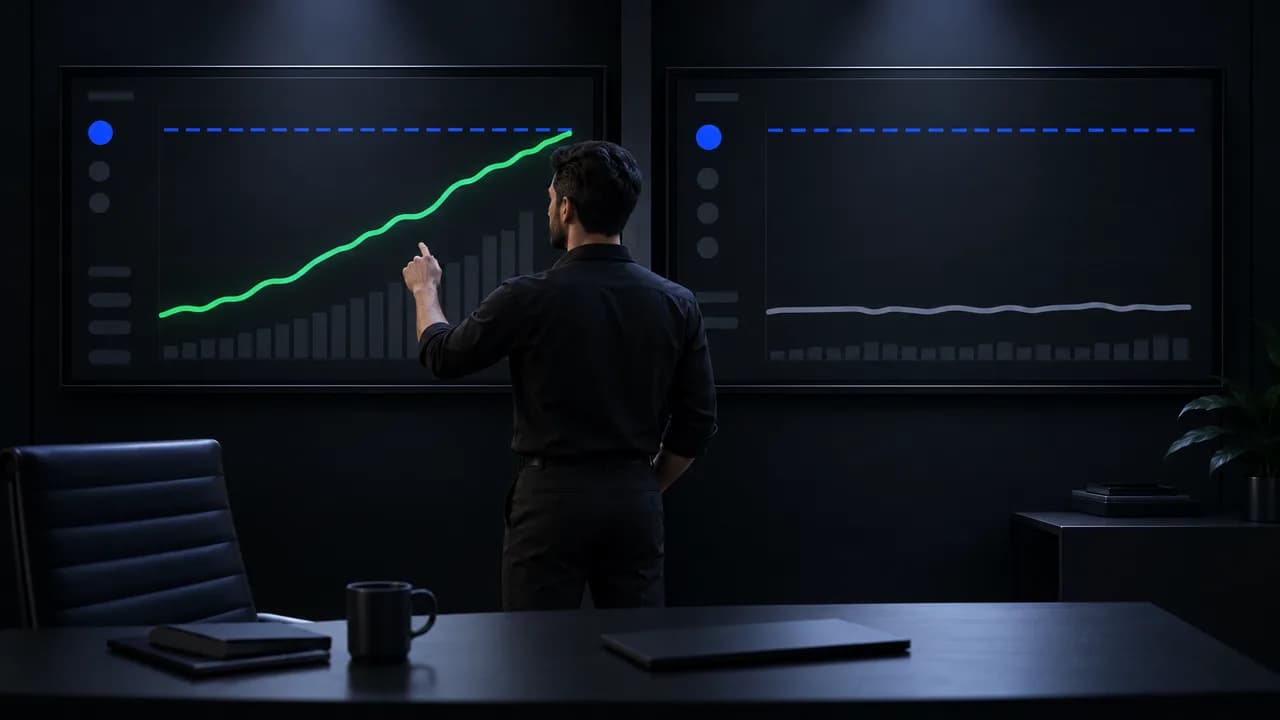
Plan a paid campaign in this order: define the offer, work out what a customer is worth and what you can pay to win one, map the funnel and the landing path, then brief creative, and choose platforms and audiences last. Targeting feels like the natural starting point because it is the first screen in every ads manager, yet it moves results least: the offer's conversion rate and margin set the ceiling on what any audience, bid strategy or creative can return.
What a Paid Media Plan Covers Before Any Ad Runs
A paid media plan is the set of decisions that fixes what you sell to whom, what a conversion is worth, how much you can pay for one, and which creative, landing experience and channels will deliver it, all settled before the first pound or riyal is spent. It serves the brand owner and the finance team as much as the media buyer, because it turns a marketing ambition into a cost ceiling someone can check. That separates it from media buying, which executes inside the plan by setting bids and budgets, and from campaign management, which adjusts live ads week to week. A plan also owns the conversion path, since a landing page not converting paid traffic turns every downstream optimization into paid noise that no bid tuning repairs. Regulated categories raise the stakes further, because compliance review adds time and cost to every creative change, which is the backdrop to our write-up on bank campaign production in Egypt and MENA.
Four Kinds of Plans and How to Tell Them Apart
You can classify almost any plan by the first decision it made, and that first decision predicts where it will stall. Open the plan document and look for the evidence in the right-hand column.
| Plan type | First decision made | Where it stalls | Evidence to check in the plan |
|---|---|---|---|
| Platform-first | Which audiences, interests and placements to target | Cheap reach that does not buy | Detailed audience lists, but no allowable cost per acquisition anywhere |
| Creative-first | The big idea and the hero video | Strong engagement, weak sales | A full production schedule, while the conversion event and landing page stay vague |
| Budget-first | Last year's split across channels | Money follows habit instead of margin | Channel spend shares fixed before any target cost per result is set |
| Offer-first | What the buyer gets, at what margin, through which funnel | Slower to launch, needs real numbers from the business | Margin, allowable cost per acquisition, funnel stages and conversion events written before creative briefs |
Plans often blend types. Still, only the one that wrote its economics first can tell you when to stop spending, because it is the only one with a number to compare results against.
The cost of a weak plan climbs as the market fills up. Egypt's digital ad spend is expected to grow 12.8% a year and reach US$1.84 billion in 2026, per Research and Markets. Research and Markets then projects a 15.5% CAGR from 2026 to 2029, taking Egypt's digital ad spend from US$1.63 billion in 2025 to roughly US$2.84 billion by 2029.
More budget chasing the same buyers favours plans whose margins can absorb a higher price per result. A platform-first plan that only worked while clicks were cheap has no such buffer. High-trust categories such as banking and fintech feel this first.
Building the Plan From Offer to Launch
- Write the offer in one sentence a buyer would repeat: what they get, what it costs them, why now, and what removes the risk of saying yes. If you cannot write it, stop, because no targeting fixes a vague offer.
- Calculate the allowable cost per acquisition from your own numbers, not platform benchmarks: gross margin on the first purchase (or on expected repeat purchases, if your retention data supports it) minus the profit you need to keep.
- Map the stages a buyer passes through and name one conversion event per stage, picking events as close to revenue as your volume allows. A qualified enquiry for a property launch and a completed checkout for an online store call for different plans.
- Walk the conversion path yourself on a mid-range phone before writing a single ad: load speed, form length, Arabic and English versions, the WhatsApp handoff, and what the buyer sees after submitting.
- Brief creative from the offer and the funnel stage, one message per stage, with Arabic copy written natively instead of translated from English lines.
- Choose platforms by where each stage's buyer already spends attention, then set audiences broad enough for automated bidding to find converters inside them.
- Split the budget so the opening weeks fund learning at each stage, with a stop rule tied to the allowable cost per acquisition from the second step.
- Agree the measurement setup: tracking for every conversion event, offline conversions fed back from the sales team, and a weekly review that compares cost per result against the ceiling.
The Arithmetic That Decides Which Plan Works
The most you can pay for a click equals your allowable cost per acquisition multiplied by the landing page's conversion rate. Every plan type is an attempt to move one of those two terms, and they do not move by equal amounts.
A platform-first plan works only on the price side. It hunts for cheaper audiences, but a cheaper audience is often cheaper because fewer people in it buy, so the saving on each click leaks out through a lower conversion rate. A creative-first plan raises click-through rate, which brings more visitors per impression. Yet the page converts them at the same rate as before, so cost per sale barely changes unless the creative also sharpens the promise the page has to keep.
An offer-first plan moves both terms. A stronger offer lifts the conversion rate, and a better-structured offer (a bundle, a deposit model, a higher first-order value) lifts the margin that sets allowable cost per acquisition. Because the terms multiply, the affordable click price rises by the product of both gains, and that headroom is what lets a campaign keep winning auctions as competition grows.
Funnel depth adds a second multiplication. For a high-consideration purchase, the overall conversion rate is the product of each step's rate: ad to landing page, page to enquiry, enquiry to call, call to sale. The weakest step caps everything above it. So doubling ad performance while a slow WhatsApp reply loses half the enquiries returns far less than fixing the reply time.
The conversion event closes the loop. Whatever event you report is the instruction your bid strategy follows. Count form fills and the system will find people who fill forms, whether or not your sales team can close them.
Mistakes That Burn Budget Before the Plan Can Learn
A property developer that opens the plan in the audience manager usually ends up optimizing to raw leads. The cost per lead looks excellent in the first report. Then the sales team reports unreachable numbers and buyers who never had the budget. The fix sits in the plan, not the ad set: define a qualified enquiry, feed it back as the conversion event, and accept a higher cost per lead in exchange for leads that close.
Beverage and consumer-goods launches tend to fall into the opposite trap. The hero film gets most of the budget, there is no direct purchase path, and the campaign ends up judged on views because views are the only thing it measured. Decide up front whether the campaign is measured on reach, on retail sell-through or on direct sales. Each choice produces a different plan, and switching mid-flight wastes what was already spent.
Translation strips the offer out of Arabic campaigns. A headline that lands in English can read flat or awkward once translated, and an Egyptian Arabic line and a Gulf Arabic line are written for different ears. Brief Arabic creative as its own copy, from the offer sentence, and test it as a separate variant instead of treating it as a localized copy of the English ad.
Spreading a modest budget across Meta, Google and TikTok from the first day leaves each platform with too few conversions to tell you anything. You end up with three weak signals instead of one clear one. Launch on the platform that matches your highest-value funnel stage, prove the cost per result against your ceiling, and add channels once the first one is stable.
How We Plan Campaigns at EKO Innovations
The plan above needs creative, conversion UX and media working from one brief, and those are the pieces we bring together. Our media team runs Meta, Google and TikTok campaigns, and our in-house studio produces the ad creative, video and motion that each stage of the plan needs, so the brief never passes between vendors.
Our UX design work covers user journeys, UI systems and conversion UX, which is where a weak landing path gets fixed. On the media side we use machine learning models that optimize bid strategies, audience targeting, and creative rotation in real-time. For the follow-up stage of the funnel, we build AI chatbots and WhatsApp automation. Our MENA-specific playbooks include Arabic SEO and regional channel reality. Our strategies are tailored by industry, including aviation, automotive, fintech, healthcare, real estate, hospitality and government.
If your need is a single boosted post or a one-off weekend promotion with no landing page and no follow-up, a full plan is more structure than the job requires, and a lighter setup will serve you better. For anything with a funnel, a margin and a sales team waiting on leads, start on our contact page, email hello@ekoads.com, call +201151110578, or visit us at 1 Falouga Street, Mohandeseen, Giza.
Frequently Asked Questions
Should I start with Meta, Google or TikTok when planning a campaign?
Pick the platform where the buyer for your weakest funnel stage already spends attention, using the cost ceiling from your plan. Launching on all three at once with a modest budget leaves each with too few conversions to judge, so prove one platform against your cost ceiling before adding the next.
How do I know what I can afford to pay per lead or sale?
Work it out from your own numbers. Take the gross margin on the first purchase, or on expected repeat purchases if your retention data supports that, and subtract the profit you need to keep. The result is your allowable cost per acquisition. Multiply it by your landing page's conversion rate to get the most you can pay per click. For lead-based funnels, apply the close rate from your sales team so the ceiling reflects leads that turn into revenue.
What should I fix first if paid clicks are not turning into sales?
Fix the weakest step in the conversion path before touching the ads. Walk the path on a mid-range phone: page speed, form length, language versions, the WhatsApp handoff and what happens after submission. Because the overall conversion rate is the product of every step's rate, one slow or confusing step caps the whole funnel. Also check which conversion event you report to the platform, since bidding optimizes toward that event even when it is not the one that produces revenue.
Does EKO Innovations handle both creative and media buying?
Yes, our creative content, ad creatives and art direction sit alongside our Meta, Google and TikTok paid campaigns with optimization. That matters for planning, because the creative brief should come from the same offer and funnel economics that set the media budget and cost ceilings. When creative and media are planned from separate briefs, the ads can promise something the landing page and the offer do not deliver, and the conversion rate pays for the gap.
Get new articles by email
New articles from EKO Innovations, sent to your inbox.
By subscribing you agree to receive emails from EKO Innovations about new articles. You can unsubscribe at any time.